.png)
Can You really gain Long-Term Residency in Thailand by “Buying a 3 Million Baht Condo”?
Recently, the idea of obtaining a long-term visa in exchange for a 3 million Baht property purchase has gone viral, with many believing Thailand has launched a new immigration policy offering "20 years of residency with a condo purchase."
While marketed as a seamless "property + residency" method, this scheme is not an official Thai visa category. Instead, it is a packaged product that uses real estate investment as supporting documentation for a Non-Immigrant B (Investment) visa. This article will break down the real logic behind this eye-catching offer, including financial thresholds, stay periods, renewal mechanisms, and key systemic risks.
I. Market Context: A Response to Thailand's Property Slowdown
The rise of the "3 million Baht condo + long-term visa" package is fundamentally a response to sustained pressure in Thailand's real estate market.
According to the Real Estate Information Center (REIC) and Kasikornbank (KKP) Research, the Thai property market has been adjusting over the past five years. In 2024, nationwide housing transfers fell approximately 15% year-on-year to just 320,000 units — the lowest in eight years. Condo transfers in central Bangkok dropped over 8%, with inventory pressure particularly acute in the 3–5 million Baht entry-level segment, where foreign buyers cannot access local loans and secondary market liquidity remains weak. In this context, developers have introduced "property + residency" packages to attract foreign buyers seeking a long-term stay in Thailand, while also helping to clear unsold inventory.
II. Visa Reality: Not an Official Visa – A Repackaged Non-B (Investment) Visa
Under Thailand’s Immigration Act and Ministry of Interior regulations, there is no independent "visa for property buyers."
The actual pathway works as follows:
The applicant purchases a Thai property worth at least 3 million Baht, uses this as proof of investment capability, and applies for a Non-Immigrant B (Investment) visa.
However, "property purchase" is not listed as an official requirement for the Non-B visa. By definition, the Non-B visa is a business visa. Its core requirements include employment by a Thai company, a work permit, and monthly salary. Purchasing a house has never been an official condition.

Thus, the "residency with purchase"method currently works like this:
Buy property → (Set up a Thai company, use the property as a registered address — compliance uncertain) → Apply for Non-B visa → Convert to 1-year residence permit.
This is not a standardized visa category explicitly defined by Thai law.
In other words, the property + residency" method is a marketing tool, not an official immigration channel. There is no direct legal link between the property and the right to stay. The property merely serves as supplementary asset proof, and approval remains subject to strict conditions.
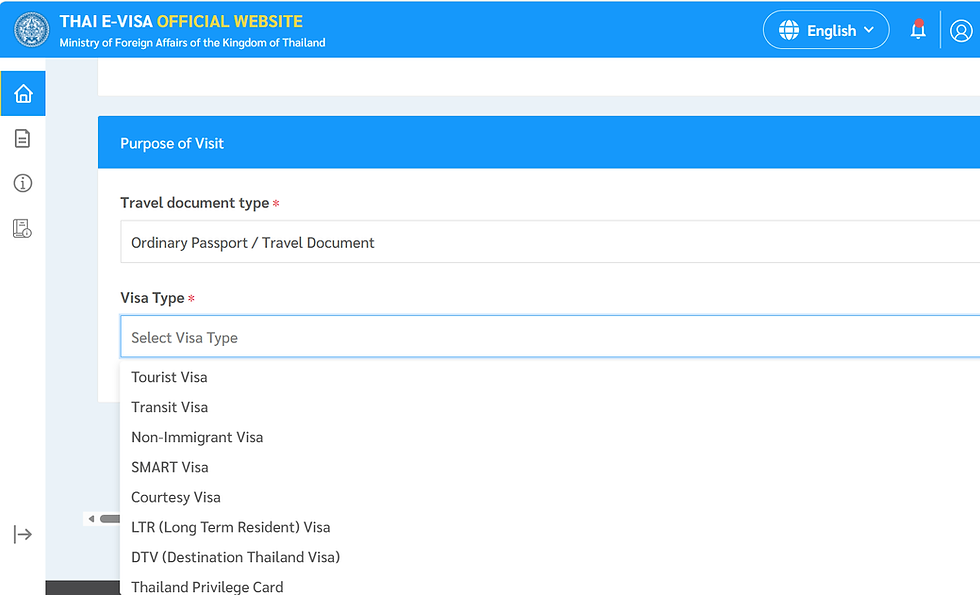
Furthermore, there is no dedicated visa option exists within Thailand E-visa system, allowing a foreigner to directly obtain long-term residency by purchasing designated property worth over 3 million Baht — further evidence that this is not a standardized or routine pathway.
III. About LSV Visa: Official Definition and Application Routes
So what is the actual visa being used? The market’s "3 million Baht purchase + long-term stay" scheme relies on the Thailand Long Stay Company’s Long Stay Visa (LSV) framework — a private-sector long-stay program, not a traditional investment or work visa.
According to official Thailand Long Stay policy, the LSV has been available since October 1st 2020, opening to foreign applicants who either purchase property worth at least 3 million Baht or sign a long-term lease. It operates under government guidance and supervision, and is designed to support retirement, medical care, and long-term living in Thailand — without permission to work or operate business.
The two officially recognized application routes are:
1. Property Purchase Route:
Buy a condominium worth ≥3 million Baht.
2. Lease Route:
Rent a condo or house with monthly rent ≥85,000 Baht, under a lease agreement of 12 months or longer.
IV. Practical Comparison of the Two Routes
1. Property Purchase Route (Mainstream marketing option):
-Requires property value ≥3 million Baht, clear title, no legal disputes.
-Additional requirements: health insurance with at least 500,000 Baht coverage, and 500,000–800,000 Baht in bank deposits.
-Core risk: Visa approval is not guaranteed. If the visa is rejected, the purchase price is non-refundable. Renewal polices are subject to annual uncertainty.
-Essence: Capital is locked into real estate, and the visa is a secondary benefit, not an independent right.
2. Lease Route:
-Requires monthly rent ≥85,000 Baht. At this level, you could rent a high-end one-bedroom or standard two-bedroom in central Bangkok.
-Annual rental cost exceeds 1 million Baht — financially burdensome for most long-stay applicants.
-Better alternative: At this cost, the Thailand Elite Visa offers a better value: no property purchase, no long-term lease, no annual renewal. It provides 5–20 years of stable residency with perks like fast-track airport passage and concierge services — more flexible, stable, and convenient than the LSV lease route.
V. Who Is the LSV "Purchase + Visa" Package Designed For?
Given the above, the LSV scheme is more suitable for:
Property-first buyers: For those who have already decided to buy a condo in Thailand and regard the visa as a secondary benefit, not the main reason for purchasing property.
In summary, if your primary goal is property investment, LSV can be an added perk — but you must accept that buying ≠ guaranteed visa, the visa is incidental, your funds are irreversible, and renewal is uncertain. If your primary goal is stable, hassle-free long-term residency, then Thailand Elite Visa is the superior choice: no property lock-in, 5–20 years of certainty, flexible capital, and straightforward processing — avoiding the core risks of "visa-for-property".
The "3 million Baht condo + 20-year residency" offer is essentially a repackaged product born from property market. Before committing to this offer, you need to be clear about what is your real objective: Are you buying for the property, or for the visa?
The sunny beaches and slow-paced lifestyle in Thailand has definitely make here an attractive long-term destination. But the path to residency is not one-size-fits-all. Only by matching your choice to your needs, so that you could truly enjoy a worry-free, long-term life in Thailand.


Comments