
What Happens When Your Indonesian Visa on Arrival Expires? What Are Your Options for Staying Long-Term?

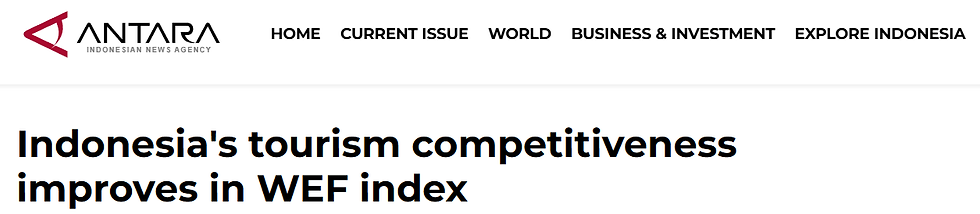
Indonesia has long been one of Southeast Asia’s most popular travel destinations, attracting international visitors to places such as Bali and Jakarta. According to an October 9, 2026 report by Indonesia’s ANTARA News, Indonesia ranked 23rd globally in the World Economic Forum’s Travel & Tourism Development Index, highlighting its strong position in the international tourism market. [1]
From leisure travel to business opportunities, Indonesia continues to attract visitors with a wide range of interests. For many people, however, Indonesia is more than just a short-term holiday destination. It can also be an option for long-term living, business expansion, and settling down with family.
Short visits and long-term stays require different immigration arrangements. Following Indonesia’s visa-free policy changes in June 2023, Chinese mainland passport holders need to choose the appropriate entry option based on their travel plans, whether that means a Visa on Arrival (VOA), an Electronic Visa on Arrival (e-VOA), or another type of visa.
For a short holiday, a VOA may be sufficient. If you plan to stay for several months or longer, it is important to understand the permitted length of stay and application requirements for the different visa options in advance.
How Long Can You Stay on a Visa on Arrival? What Happens When It Expires?
Indonesia’s Visa on Arrival (VOA) generally allows a stay of 30 days and can be extended once in accordance with the applicable rules, giving a maximum stay of 60 days in total.
This option is usually convenient for tourism, visiting family, or short business visits. However, if you intend to stay longer, you need to consider not only your current visa but also how you will legally remain in Indonesia afterwards.
One important point to remember is that once your permitted stay expires, you are no longer authorised to remain in Indonesia under that visa. Even if you have submitted an extension application, are arranging a return flight, or plan to re-enter Indonesia later, none of these automatically gives you the right to continue staying in the country. Overstaying may result in fines, deportation, or other immigration measures, depending on the circumstances of the case.
Indonesian media have reported a case in Bali involving a foreign woman who overstayed by 93 days before being deported by immigration authorities. According to the report, her stay permit had expired, and she had neither applied for an extension nor left Indonesia on time. [2]
This case serves as a reminder that visa expiry dates should be taken seriously. If your plans might change, check the extension rules and processing timelines in advance rather than waiting until your visa is about to expire. If you already know that you want to live in Indonesia long-term or pursue business activities there, it is worth exploring more suitable visa options before travelling.

From Short Visits to Long-Term Living: What Are Your Options in Indonesia?
If the permitted stay under a short-term VOA does not meet your needs, Indonesia offers several long-term stay options. The main categories include employment, investment, family reunification, retirement, remote work, and the Second Home programme. Each has its own eligibility criteria and is designed for different circumstances.
Work visas (E23, E25 and other relevant categories)
These are generally suitable for people who have secured employment with an Indonesian company. The application process typically depends on the employer, the position, and the applicable work authorisation requirements. If you do not have a local employer and have no plans to work in Indonesia, this route may not be suitable.
Investment visas (E28 series)
These are intended for people planning to make qualifying investments in Indonesia and who meet the relevant investment requirements. It is important to understand that setting up a company, obtaining investor residence status, and securing permission to conduct business or work are separate matters. Registering a company alone does not automatically resolve all immigration and business licensing requirements.
Family reunification visas (E31 series)
These may be suitable for people who have qualifying family relationships with Indonesian citizens or eligible foreign residents in Indonesia, such as a spouse who meets the relevant criteria. Eligibility depends on the specific family relationship and visa category. This option is not available to everyone who wishes to relocate to Indonesia with family members.
Retirement stay visa (E33E)
This option is designed for eligible retirees who meet the applicable age, financial, and other requirements and intend to spend their retirement in Indonesia. Since the category has specific eligibility criteria, people who do not meet the age requirement or have different long-term residence goals will need to consider other options.
Remote work visa (E33G)
This category is intended for eligible individuals who work remotely for an overseas employer. Applicants need to verify that their income sources, employment relationship, and supporting documents meet the applicable requirements.
If you do not intend to take up local employment, invest in or operate a business in Indonesia, or qualify through family reunification, you may wish to explore Indonesia’s Second Home visa, E33.
This programme is primarily aimed at people seeking long-term residence who can meet the relevant financial requirements. The main considerations are preparing the required application documents and meeting the prescribed deposit requirements.
Whether you want to spend more time living in Indonesia, plan for an overseas lifestyle, or establish an additional residence option, it is worth reviewing the available routes based on your personal circumstances.
Indonesia’s Second Home Visa (E33): More Flexibility for Long-Term Living
Indonesia’s Second Home visa (E33) is valid for five years. Eligible holders may apply for an extension in accordance with the applicable rules, with a maximum cumulative stay of up to 10 years.
Applicants must provide proof of funds amounting to USD 130,000 or the equivalent and deposit the funds into an eligible Indonesian bank account as required. The funds remain the applicant’s own money, and the deposit may earn interest, subject to the bank’s terms and conditions.
The application documents mainly include identity documents, the relevant application materials, and proof of funds. The process generally involves applying from outside Indonesia, entering the country after approval, and completing the required residence and funds-related formalities in accordance with the applicable rules. Eligible spouses and children may also apply for the relevant residence status under the applicable provisions.
It is important to note that the E33 visa does not automatically grant the right to take up employment in Indonesia. Any investment or business activities must also be assessed against local regulations to determine what is permitted.
If you plan to apply for permanent stay status (ITAP) in the future, you will need to meet the relevant legal requirements. Holding an E33 visa for a certain number of years does not automatically entitle you to permanent residence.
Whether your goal is to live in Indonesia long-term or to plan ahead for an additional overseas residence option, understanding the available pathways early can help you choose the arrangement that best suits your needs and future plans.
Sources
[1] ANTARA News. Indonesia’s Tourism Competitiveness Improves in WEF Index.
[2] ANTARA News. Bali Immigration Deports Nigerian Woman for 93-Day Overstay.


Comments