.png)
No Property Purchase. No Business Setup. A 90-Day Annual Stay Requirement: Why El Salvador’s Asset-Light Residency Is Gaining Traction
The World Cup spotlight usually follows the goalscorers. This year, however, some of that attention has also fallen on the officials.
In the recently concluded World Cup semi-final between France and Spain, France’s campaign ended with a 2–0 defeat. Two members of the officiating team—referee Iván Barton and assistant referee David Morán—were from El Salvador. To most readers, those may be only two names in a post-match report. For El Salvador, it was a rare moment of global visibility.
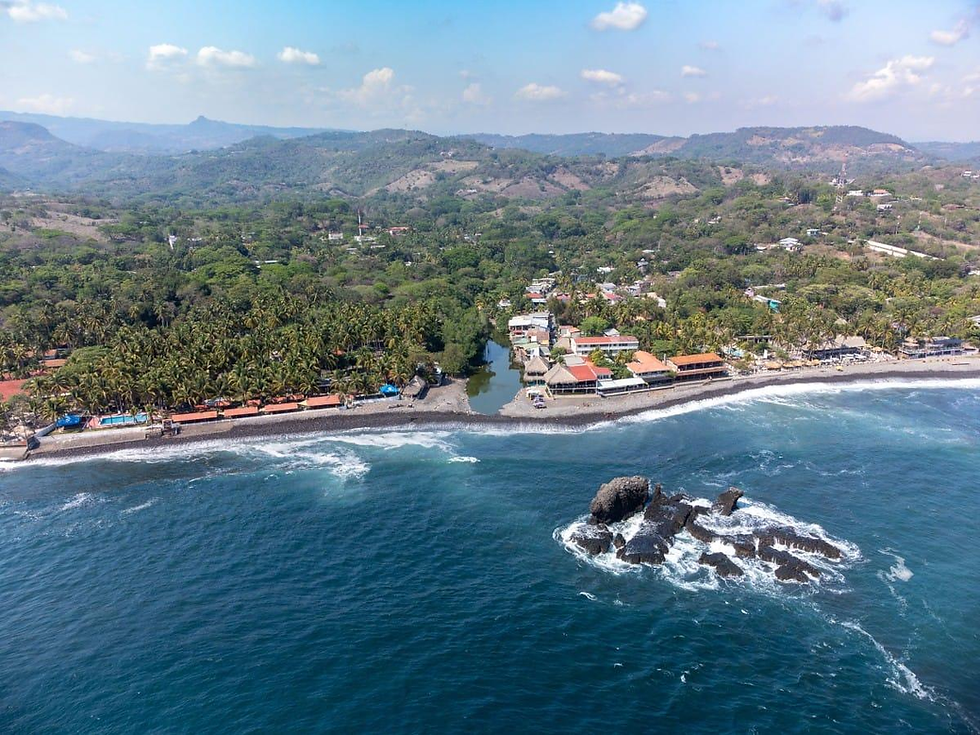
For years, the Pacific coastline, a long-standing U.S.-dollar economy and the country’s digital-asset policies accounted for much of the outside world’s impression of El Salvador. Today, a fast-growing tourism market and immigration-law reforms that recalibrated the annual physical-presence requirement for temporary residents are drawing the country into a more practical conversation: as long-term residence programs elsewhere raise their thresholds, could El Salvador become an option worth studying early for families seeking an asset-light route? Strip away the familiar headlines, and a more consequential story begins to emerge.
El Salvador: From Being Seen to Being Worth Studying
Since President Nayib Bukele took office, El Salvador has entered the global conversation more than once: in 2021, it became the first country to grant Bitcoin legal-tender status; tourism moved to the center of the government’s development agenda; and in March 2026, amendments to the Special Law on Migration and Foreigners came into force. These changes sit in different policy areas, yet they point in the same direction—the country is actively redefining its place in international markets.
As many jurisdictions raise investment thresholds and tighten eligibility reviews, the question facing globally minded families is no longer simply, “Which country should we choose?” It is also, “Which countries still offer a practical residence route that can be sustained over time?” Short-lived market enthusiasm is beside the point. What matters is whether the rules endure, the costs remain manageable and the route stays clear several years from now.
With its international profile rising, El Salvador is also being reassessed by investors and people considering a cross-border lifestyle. Its digital economy is distinctive, but it does not tell the whole story. The country retains a comparatively open long-term residence framework and continues to adjust the way that framework is administered—an alternative for applicants who value regional access, tax considerations and flexibility in how they organize their lives.
Policy in Context: An Established Framework, Refined Rather Than Reinvented
People encountering El Salvador’s residence options for the first time sometimes assume they are newly launched programs. They are not. Both the El Salvador Rentista Visa and the El Salvador Pensioners Residence Visa correspond to formal residence categories long established under the Special Law on Migration and Foreigners (Ley Especial de Migración y Extranjería, or LEME).
At a time when long-term residence thresholds and eligibility reviews are becoming more demanding in many markets, El Salvador still maintains a framework that combines legal continuity with practical flexibility. The two routes rest on clear statutory foundations:
● El Salvador Rentista Visa(Rentista):Article 145 of LEME covers foreign nationals who receive permanent and stable monthly income sourced from or generated abroad. The required amount is tied to the prevailing minimum wage in the commerce and services sector. As a rule, holders may not take paid employment in El Salvador, subject to the statutory exceptions.
● El Salvador Pensioners Residence Visa(Pensionado):Article 144 of LEME applies to foreign nationals who can demonstrate permanent and stable monthly pension income from abroad. The statutory minimum is linked to the same commerce and services wage benchmark, and the restriction on paid employment is subject to the exceptions set out in law.


For these two routes, the central question is relatively straightforward: can the applicant demonstrate an independent and stable source of income? Neither route is built around a compulsory property purchase, a large capital investment or sponsorship by a local employer. Cross-border professionals, freelancers and families with recurring foreign income—as well as retirees seeking a different pace of life—may therefore find a route that corresponds to the way they already support themselves.
The framework received a consequential update in March 2026, when Decree No. 531 amended the temporary-residence rules. The most closely watched change reduced the minimum annual physical-presence requirement for temporary residents from roughly 180 days to 90 calendar days, which may be completed consecutively or cumulatively. It may look like a numerical adjustment; in practice, it materially changes how applicants can plan work, family commitments and travel across the year.
El Salvador is therefore not replacing its residence system. It is fine-tuning an established one. That combination—statutory continuity and a more workable residence requirement—helps explain the country’s renewed appeal.

This more open route is consistent with El Salvador’s broader effort to modernize and engage with the outside world. The statutory design shows a practical openness to foreign residents who can support themselves. Entry, continued residence and later integration are treated as stages of an ongoing relationship with the country—not simply a one-off transaction. The result is a system with a defined legal pathway, yet enough flexibility to accommodate different life arrangements.
Applicants living on overseas income and retirees reorganizing the next stage of life should begin with two questions: does the nature of the income fit the relevant category, and can the annual residence plan be met in practice? The headline threshold is only the first screen. Any long-term decision also depends on the consistency of implementation and the applicant’s ability to maintain the route over time. El Salvador’s recent changes provide a direction worth evaluating carefully; that is why the country is appearing more often in serious residence-planning conversations.

Low Capital Commitment, High Flexibility: The Case for El Salvador’s Asset-Light Residency Routes
✓ An income-led route, rather than a capital-intensive one
Many residence programs begin with a property purchase, business investment, entrepreneurial commitment or substantial deposit. The appeal of El Salvador’s two income-based categories lies elsewhere: they place stable foreign income at the center of the assessment. Using the 2025 industrial and services minimum wage of US$408.80 per month published by El Salvador’s Ministry of Labor and Social Welfare, the base monthly income threshold is approximately US$1,227 for the El Salvador Pensioners Residence Visa and US$1,636 for the El Salvador Rentista Visa. For applicants who already receive qualifying foreign income, this is better understood as an asset-light entry point into Central America’s long-term residence system than as a capital-intensive migration program.
✓ A U.S.-dollar economy and clearer long-term budgeting
El Salvador has used the U.S. dollar since 2001. Everyday spending, most cross-border settlement and many asset-planning decisions can therefore be approached in dollars, without the additional step of converting into an unfamiliar local currency. For applicants who already hold dollar assets or receive overseas income or pensions in dollars, household budgets for living costs, healthcare and education can be mapped more directly. Dollarization does not remove inflation or broader economic risk; what it chiefly reduces is the added exchange-rate exposure associated with a sharply depreciating domestic currency.
✓ A 90-day annual stay, with onward planning for permanent residence and naturalization
Planning an overseas status does not mean relocating immediately. Many applicants still have businesses, family responsibilities or cross-border work elsewhere, so the time they must spend in-country directly affects whether a residence permit is sustainable. Under the amended rules, temporary residents must complete at least 90 calendar days of physical presence each year, consecutively or cumulatively. That creates substantially more room to organize an annual schedule.
Once the required residence period has been completed, an applicant may seek permanent residence subject to the law and personal eligibility in force at that time. After five years of lawful residence, naturalization may also form part of the longer-term plan. The onward direction is therefore clearer than a short-stay arrangement, while the 90-day rule preserves a practical degree of flexibility.
Globevisa Support: Experience in the Americas, Backed by Process and Responsibility
At Globevisa, residence planning is not treated as a single filing. It is a long-term decision that can shape a family’s options, timetable and sense of security for years. Our work therefore focuses on whether the route is sustainable, whether the supporting documents meet the relevant requirements and which risks may emerge after approval.
1. More than 20 years of experience across the Americas
Globevisa has spent more than two decades working with residence and citizenship planning across the Americas. That experience informs our understanding of El Salvador’s migration policy, documentary requirements, review priorities and the transition toward permanent residence or naturalization.
Before a case formally begins, the team reviews the stability of the applicant’s income, the proposed residence schedule and the structure of any family application. A program may be attractive without being the right fit for every applicant. Clarifying that point before submission matters more than moving quickly for its own sake. For many families, the real measure is not whether approval can be secured today, but whether the route remains workable three or five years later.
2.A mature, standardized process—applied to each case individually
The most demanding work in an El Salvador Rentista Visa or El Salvador Pensioners Residence Visa case usually lies in organizing income evidence, meeting document formalities, arranging legalization or apostille requirements, coordinating translation and managing each procedural stage.
A discrepancy in document dates, certification steps or the explanation of income may trigger a request for further evidence and delay the overall timetable. Globevisa checks each stage against a defined process, while avoiding a one-size-fits-all file strategy. Income sources and family structures differ; the preparation should reflect those differences. Applicants encountering international residence planning for the first time can therefore understand where the case stands and what comes next.
3. Long-term risk control and sustainable planning
In residence planning, stability is the real test. Submission is only one stage. The durability of the income source, the practicality of the residence schedule and the later transition to permanent residence or naturalization all deserve attention before the file is lodged.
Globevisa applies a review standard that goes beyond the basic document checklist. Drawing on prior case experience, the team considers policy movement, documentary risk and long-term status continuity in advance. The purpose is practical: identify potential issues before submission and address factors that could complicate maintenance of the status later. That focus on long-term value underpins Globevisa’s approach to the El Salvador routes.


Comments